


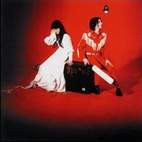
The White Stripes – Seven Nation Army
Posted Apr 29, 2017 11:13 AM, 16 revisions total, last modified Dec 01, 2017 11:50 AM by Udjine
“Seven Nation Army” is a song from The White Stripes fourth album “Elephant,” released in 2003.
https://www.ultimate-guitar.com/en/wiki/The_White_Stripes_-_Seven_Nation_Army
Contents
1 Story behind the song
2 Music videos
2.1 Official music video
2.2 Live version
2.3 Famous covers
3 Gear and settings
3.1 Guitar
3.2 Amps and effects
3.3 Amp settings
4 Tuning
5 Song key
6 Techniques
6.1 Song breakdown
7 Recommended lessons
7.1 Guitar lesson in open A tuning with a slide
7.2 Guitar tutorial in standard tuning
Story behind the song
The main riff was composed at a sound check before a show at the Corner Hotel in Melbourne, Australia. Jack White recalled to Rolling Stone: “There’s an employee here at Third Man named Ben Swank, and he was with us on tour in Australia when I wrote that song at soundcheck. I was playing it for Meg and he was walking by and I said, ‘Swank, check this riff out.’ And he said, ‘It’s OK.'”
“Seven Nation Army” meaning was rather unclear, so Jack pointed out: “I didn’t have lyrics for it until later on and I was just calling it ‘Seven Nation Army’ – that’s what I called the Salvation Army when I was a kid. So that was just a way for me to remember which one I was talking about, but it took on a new meaning with the lyrics.”
The song is rare in being a very good song about that titanic cliche, the pressures of fame. Feeling squashed with the level of recognition they were getting, White came up with a story about a person who returns to native town and finds all his friends are gossiping about him. “He feels so bad he has to leave town,” he said, “but you get so lonely you come back. The song’s about gossip. It’s about me, Meg and the people we’re dating.”
Jack White said that the main riff was planned for the James Bond film if they ever got asked to write a song for it. But he decided it was unlikely and used it in this song.
YouTube preview picture
Jack White speaks about composing of “Seven Nation Army” and shows Jimmy Page and The Edge how to play this song.
Music videos
Official music video
The video consists of one seemingly continuous shot through a kaleidoscopic tunnel of mirrored black, white and red triangles, touching on Jack’s love of the number three. The triangle slides alternate between images of Jack or Meg playing, interspersed with marching skeletons and an elephant, referring to the name of the album “Seven Nation Army” appeared on. The speed at which the triangles move forward through the tunnel speeds up and slows down in unison with the dynamics of the song. During the video, when the song begins to intensify, the lights in surrounding the triangles flash and other effects build up as well. The imagery bears a striking resemblance to Jason and the Argonauts as well as Bill Gold’s theatrical release poster for A Clockwork Orange.
In the video when Jack White points to his hand as he begins the third verse, he’s showing you where he is from. The state of Michigan is shaped like a mitten and people in the state often point to a spot on their hand when asked where they are from.
YouTube preview picture
Live version
YouTube preview picture
Seven Nation Army Live at Rock Am Ring in 2007.
Famous covers
Artist to cover this song include Audioslave, The Hives, Metallica, The Flaming Lips, Joss Stone, Jamie Cullum, Living Colour, Hard Fi, The Pretty Reckless, Kelly Clarkson, and Kate Nash.
YouTube preview picture
The Pretty Reckless perform Seven Nation Army in Argentina in 2012.
YouTube preview picture
The Glitch Mob Remix of “Seven Nation Army” was featured as OST of Battlefield 1.
Because of its simple and recognizable main riff this song can be covered even by a cruise ship:
YouTube preview picture
MSC Magnifica plays “Seven Nation Army” during Hamburg’s “harbour-birthday” celebration on May 9, 2014.
Gear and settings
The song and the “Elephant” album itself made a legend of Hackney’s Toe Rag Studios, a mecca for old-school analog equipment. Founded by Liam Watson, it only houses equipment from pre-1960.
Guitar
Semi-acoustic 1950s style Kay Hollowbody guitar
The guitar is originally a tobacco sunburst, but it was covered in kraft paper in 2001 – supposedly to stop the feedback, though it may be just for the aesthetic reasons. As of the specs, it features a single DeArmond pickup with no controls but an on/off switch, spruce top, maple sides and back, and a floating rosewood bridge.
In the official video, we can see 1964 “JB Hutto” Res-O-Glass Airline Guitar, which is his main guitar for The White Stripes’ live performances.
The guitar was made by Valco, a company that is better known for making National and Supro guitars before it’s demise in 1968.
It has a hollow Res-O-Glas fiberglass body, two Valco single coil pickups (even though they look like humbuckers), and a non-adjustable steel reinforced neck (without truss rod).
Amps and effects
1960s Sears Silvertone 1485 Six Ten
This was Jack’s main amp with the White Stripes. He has one head with two Sears Silvertone 6×10″ cabinets with Jensen speakers.
Electro Harmonix Big Muff Pi
Pretty much his main pedal, and has been since the very early days.
Digitech Whammy WH-4
His #2 effect. Can be heard on many songs, including “Seven Nation Army”.
Amp settings
Gain – 8
Treble – 7
Mid – 5
Bass – 8
Prescence – 8
Digitech Whammy is set to one octave down.
Tuning
Open A tuning (E A E A C# E)
Song key
The song is in G major key.
Techniques
The White Stripes have no bass player, so the popular riff is actually a guitar with an octave effect to sound like a bass. The riff, which sounds a lot like a bass guitar, was created by running Jack’s semi-acoustic 1950s style Kay Hollowbody guitar, tuned to open A for slide playing through a DigiTech Whammy pedal, which is set down an octave.
In keeping with the seven (7) figure that is a distinctive, distinguishing and essential characteristic of this track, the riff consists of seven notes that are repeated in the same order throughout the whole song.
Song breakdown
Intro: 0:00 – 0:15
The intro introduces the main riff of the song, which is played through the whole song.
Verse 1: 0:15 – 0:47
Verses keep the same main riff pattern.
Chorus 1: 0:47 – 0:52
Short choruses consist of one sentence and played with power chords.
Post-chorus riff: 0:52 – 1:12
Post-chorus riff played with a slide, creating its distinctive sound.
Interlude: 1:12 – 1:26
Interludes come back to the main riff of the song
Verse 2: 1:26 – 1:57
Chorus 2: 1:57 – 2:02
Post-chorus riff / Solo: 2:02 – 2:38
In the recorded version guitar is back-tracked by the main riff of the song, but in live versions, we can hear only the solo part, which isn’t that different from the perspective of used techniques and is also played with a slide. At the end of the solo, chord progression from the chorus is used.
The rest part of the song stays the same.
Interlude: 2:38 – 2:53
Verse 3: 2:53 – 3:24
Chorus 3: 3:24 – 3:29
Post-chorus riff / Outro: 3:29 – 3:52
Recommended lessons
Guitar lesson in open A tuning with a slide
YouTube preview picture
Guitar tutorial in standard tuning
Octave pedal effect is also explained.
YouTube preview picture